HDPE vs Steel Pipe: Which Is Better for Long-Term Infrastructure?
13 Feb . 2026
Choosing the right pipe material is critical for long-term infrastructure projects such as water supply systems, gas transmission, and industrial pipelines. Two of the most commonly compared materials are HDPE (High-Density Polyethylene) pipes and steel pipes. Each has distinct advantages and limitations depending on project requirements, environmental conditions, and lifecycle expectations. This article explores HDPE vs steel pipe performance to help engineers and project owners make informed decisions.
Material Durability and Lifespan
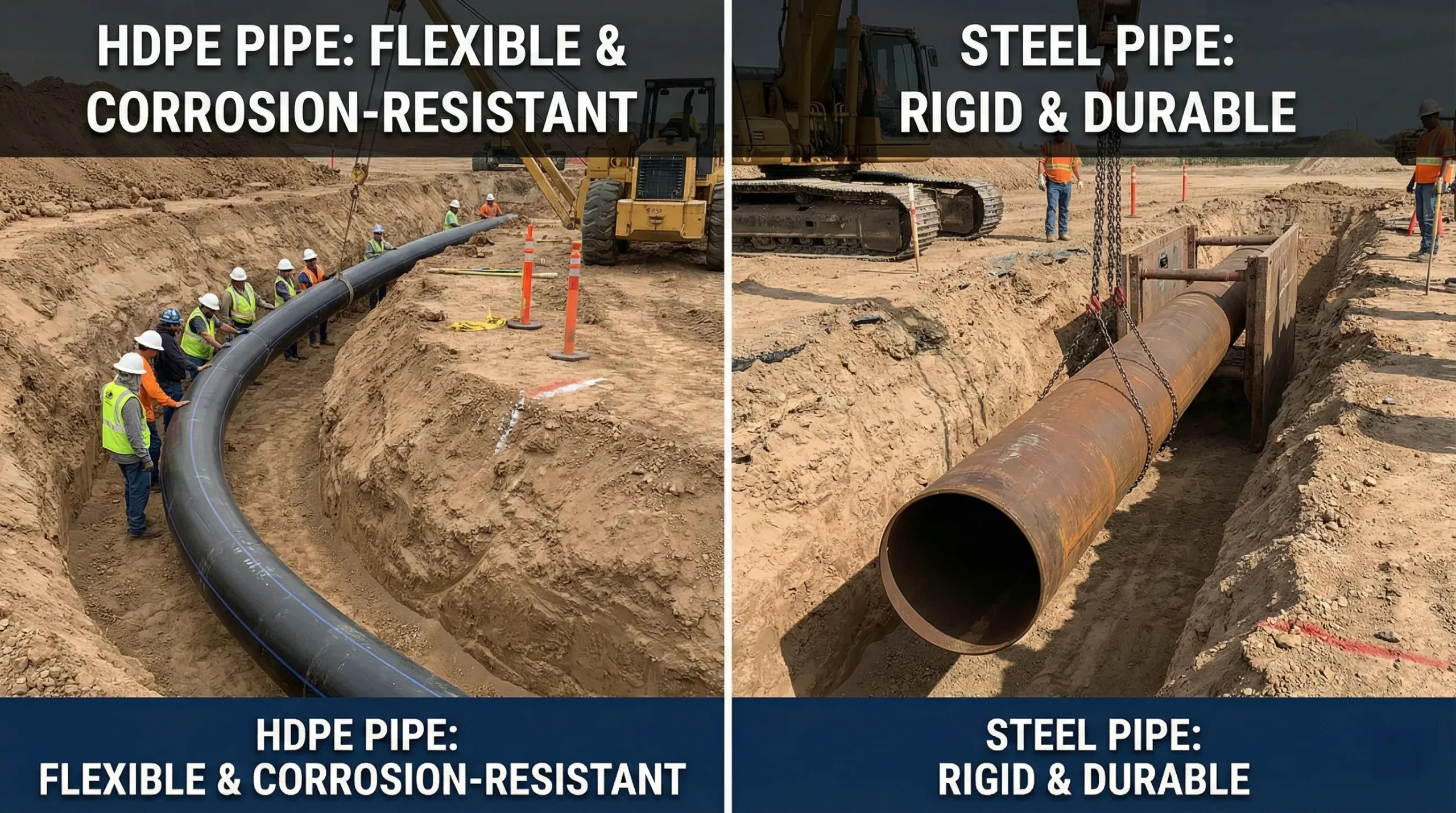
HDPE pipes are known for their flexibility, impact resistance, and long service life. Under normal operating conditions, HDPE pipelines can last more than 50 years without significant performance degradation. Steel pipes, while mechanically strong and capable of handling high pressures, are more vulnerable to corrosion, especially in aggressive soils or marine environments. Without proper coatings and cathodic protection, steel pipe lifespan may be significantly reduced. For corrosion-prone environments, HDPE often provides a longer and more predictable lifecycle. Learn more about HDPE pipes on our HDPE Pipe Products page.
Corrosion and Chemical Resistance
One of the key differences in the HDPE vs steel pipe comparison is corrosion resistance. HDPE pipes are inherently resistant to corrosion, chemical reactions, and electrochemical degradation. Steel pipes, on the other hand, require protective coatings, linings, and ongoing maintenance to prevent rust and chemical attack. In applications involving wastewater, chemicals, or saline conditions, HDPE pipes offer a clear advantage with minimal maintenance requirements. For more on pipe materials, see our download on HDPE Pipe Benefits.
Installation and Construction Efficiency
HDPE pipes are lightweight and flexible, making transportation and installation faster and more cost-effective. Techniques such as butt fusion and electrofusion create leak-free joints that are often stronger than the pipe itself. Steel pipes are heavier and typically require welding, lifting equipment, and skilled labor, which can increase installation time and costs. For long-distance or remote infrastructure projects, HDPE often reduces overall construction complexity. Explore related service in our service page.
Cost and Lifecycle Economics
While steel pipes may offer lower upfront material costs in some cases, their total lifecycle cost is often higher due to corrosion protection, maintenance, and repair requirements. HDPE pipes typically provide lower long-term costs thanks to reduced maintenance, longer service life, and faster installation. When evaluating long-term infrastructure investments, HDPE frequently delivers better overall value. For cost-related insights, check our PVC Piping System Overview.
Which Pipe Is Better for Long-Term Infrastructure?
The choice between HDPE vs steel pipe depends on project-specific factors such as pressure requirements, environmental conditions, and budget priorities. Steel pipes remain suitable for extremely high-pressure or high-temperature applications. However, for most long-term infrastructure projects involving water, gas, and industrial fluids, HDPE pipes offer superior corrosion resistance, lower lifecycle costs, and easier installation. As infrastructure projects increasingly prioritize sustainability and durability, HDPE continues to gain global acceptance.
Conclusion
Both HDPE and steel pipes have their place in modern infrastructure. However, when long-term performance, corrosion resistance, and lifecycle cost are key considerations, HDPE pipes are often the better choice. Careful evaluation of project requirements will ensure the selected pipe material delivers reliable performance for decades.

 English
 Español