
 English
 Español
How to Choose the Right Pipe Fitting Supplier for Global Projects

1. Verify International Certifications and Standards
For global projects, pipe fittings must comply with international standards such as ISO, ASTM, ANSI, DIN, or EN. Always confirm that the supplier can provide valid certification documents and third-party test reports. Certified suppliers reduce the risk of customs clearance issues and ensure compatibility with existing piping systems. You can explore different standards-compliant products in our pipe fittings product range.2. Evaluate Manufacturing Capability and Quality Control
A strong pipe fitting supplier should have advanced manufacturing equipment, skilled technicians, and a strict quality control system. Ask about raw material sourcing, inspection processes, pressure testing, and dimensional checks. Suppliers with in-house quality control are more consistent than trading companies, especially for large-scale international orders.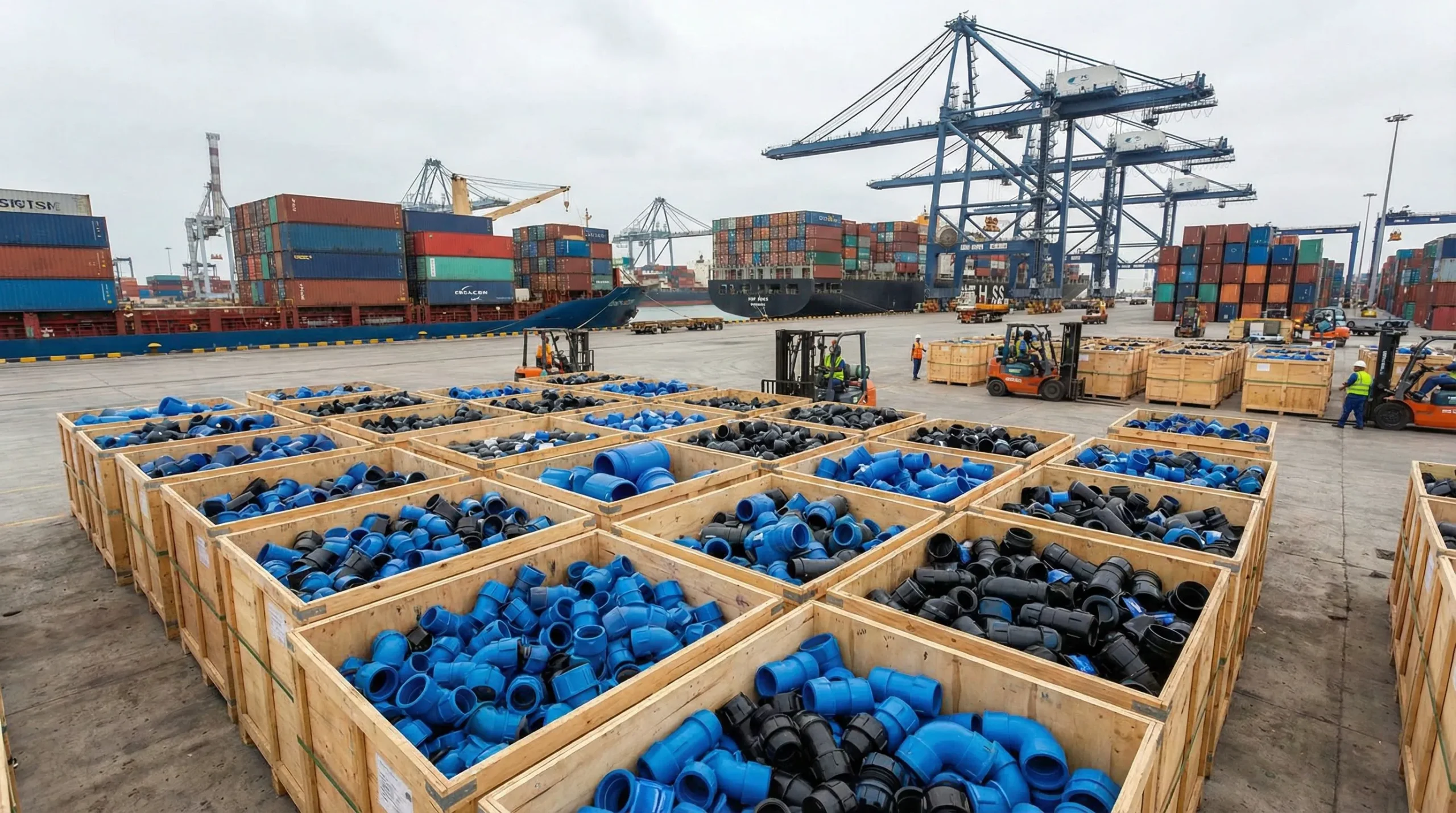
3. Assess Experience in Global Projects
Suppliers with experience in international projects understand regional regulations, documentation requirements, and packaging standards. They are familiar with exporting to different markets and handling complex logistics. Reviewing past global projects or case studies can help you assess whether the supplier is suitable for your region. You may also review our insights on global pipe project solutions.4. Check Product Range and Customization Ability
Global projects often require a wide range of pipe fittings, including elbows, tees, reducers, flanges, and custom-made components. Choosing a supplier with a complete product portfolio simplifies procurement and ensures compatibility. Customization capabilities are especially important for non-standard pressure ratings or special materials such as HDPE, PVC, or stainless steel. Learn more about material options in our HDPE & PVC pipe solutions.5. Consider Logistics, Packaging, and Delivery Reliability
Timely delivery is crucial for international projects. A reliable supplier should offer professional export packaging, clear shipping schedules, and support for sea, air, or multimodal transport. Suppliers experienced in global logistics can help reduce transit damage and avoid unexpected delays.