27 Feb . 2026
When selecting high-density polyethylene (HDPE) piping systems for water supply, gas distribution, or industrial applications, understanding the difference between SDR 11 and SDR 17 is critical. SDR (Standard Dimension Ratio) directly affects pipe wall thickness, pressure capacity, and overall performance.
In this guide, we compare SDR 11 vs SDR 17 HDPE pipe in terms of structure, pressure ratings, cost considerations, and best-use scenarios to help engineers and procurement managers make informed decisions.
What Does SDR Mean in HDPE Pipe?
SDR (Standard Dimension Ratio) is the ratio of the pipe’s outside diameter (OD) to its wall thickness. The formula is:
SDR = Outside Diameter ÷ Wall Thickness
A lower SDR number means a thicker wall and higher pressure resistance. A higher SDR number means a thinner wall and lower pressure capacity.
For example:
- SDR 11 has thicker walls and handles higher internal pressure.
- SDR 17 has thinner walls and is suitable for moderate-pressure systems.
For a full range of HDPE pipe options and specifications, you can explore our
HDPE Pipe products page.
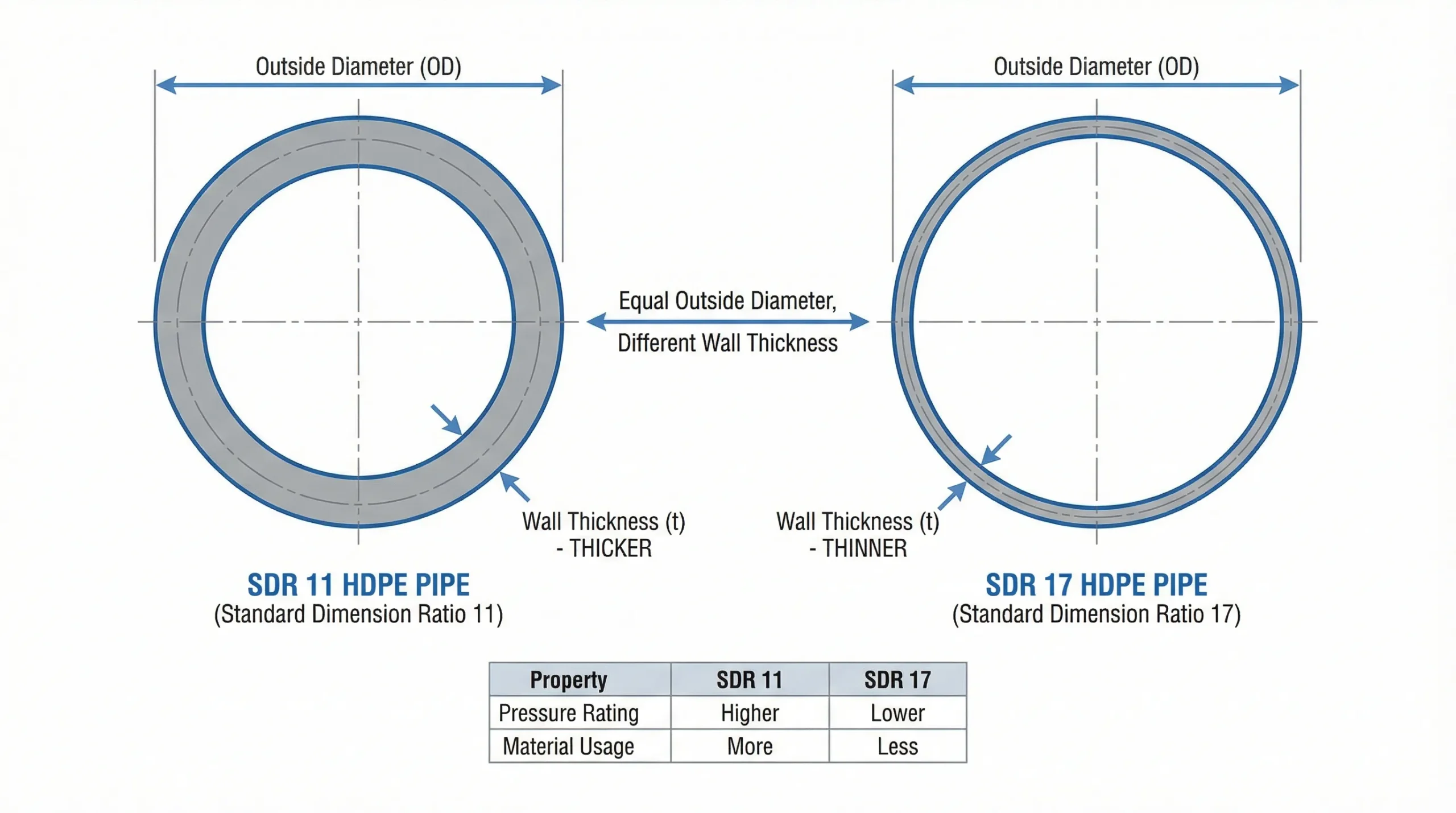
SDR 11 vs SDR 17: Structural Differences
| Parameter |
SDR 11 |
SDR 17 |
| Wall Thickness |
Thicker |
Thinner |
| Pressure Rating (PE100) |
PN16 (1.6 MPa) |
PN10 (1.0 MPa) |
| Weight per Meter |
Higher |
Lower |
| Material Cost |
Higher |
More economical |
| Common Standards |
ISO 4427, EN 12201 |
ISO 4427, EN 12201 |
Because SDR 11 pipes have thicker walls, they are heavier and more robust, making them ideal for high-pressure transmission systems.
Pressure Ratings Explained
The pressure rating of HDPE pipe depends on both SDR and material grade (PE80, PE100, or enhanced PE100-RC). Under the same material grade:
- SDR 11 (PE100/PE100-RC) typically supports up to PN16 (16 bar) pressure levels.
- SDR 17 (PE100/PE100-RC) typically supports up to PN10 (10 bar) pressure levels.
Actual working pressure should also consider temperature, installation conditions, and safety factors. For more details on advanced HDPE materials such as PE100-RC, see our
PE100-RC HDPE pipe specifications page.
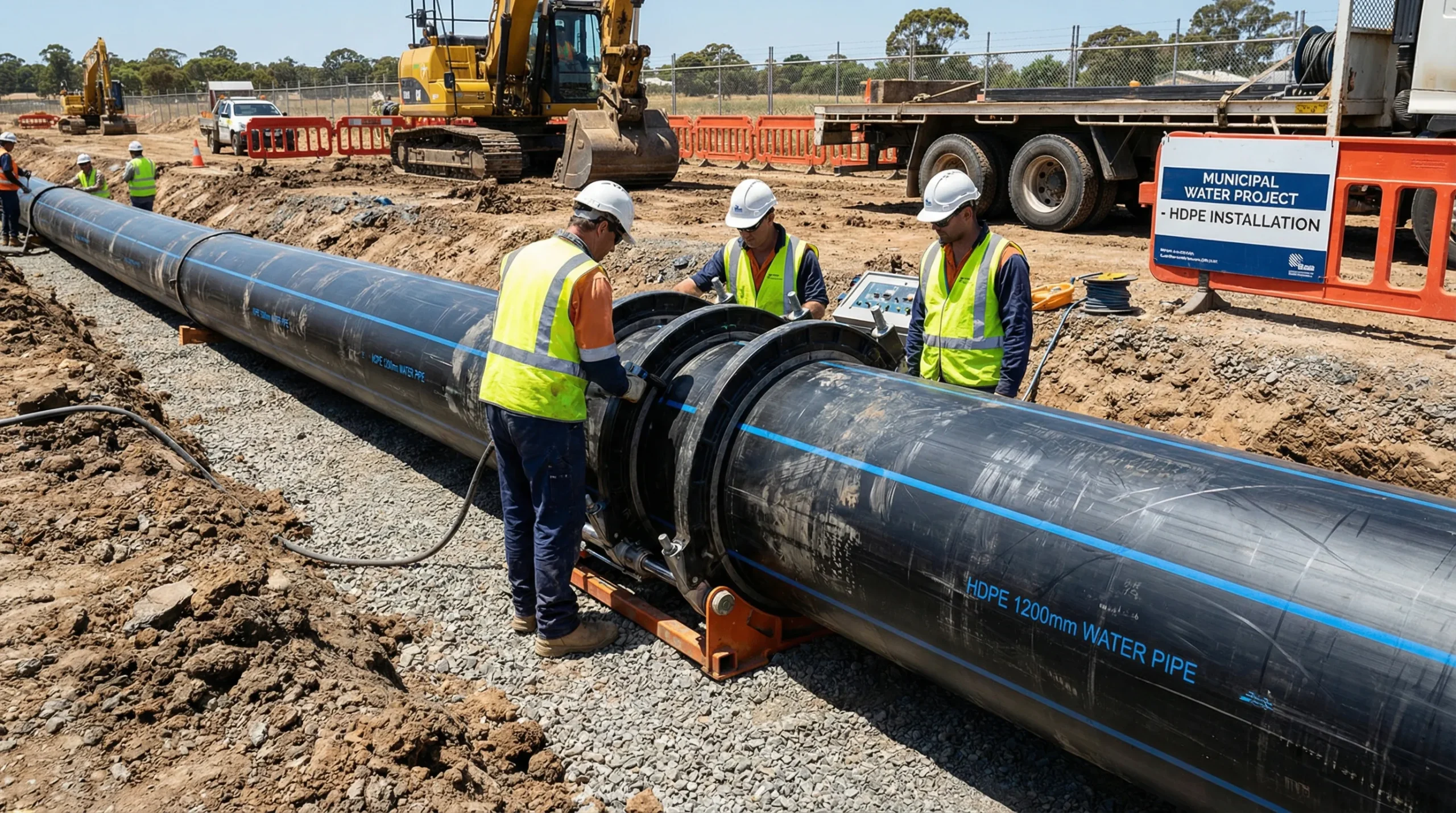
Application Differences
SDR 11 Applications
- High-pressure water supply systems
- Municipal water mains
- Gas distribution pipelines
- Industrial pressure pipelines
- Fire protection systems
SDR 11 is preferred when higher internal pressure resistance and enhanced safety margins are required.
SDR 17 Applications
- Low to medium-pressure water supply
- Irrigation and agricultural systems
- Drainage and sewer force mains
- Industrial fluid transfer with moderate pressure
SDR 17 offers a balance between performance and cost efficiency. For example, our
HDPE drainage and sewer pipes are often specified with SDR ratings suited for moderate pressure applications.
Cost and Installation Considerations
Because SDR 11 pipes use more raw material, they cost more per meter compared to SDR 17. However, higher pressure tolerance can reduce the need for additional reinforcement or thicker safety factors in design.
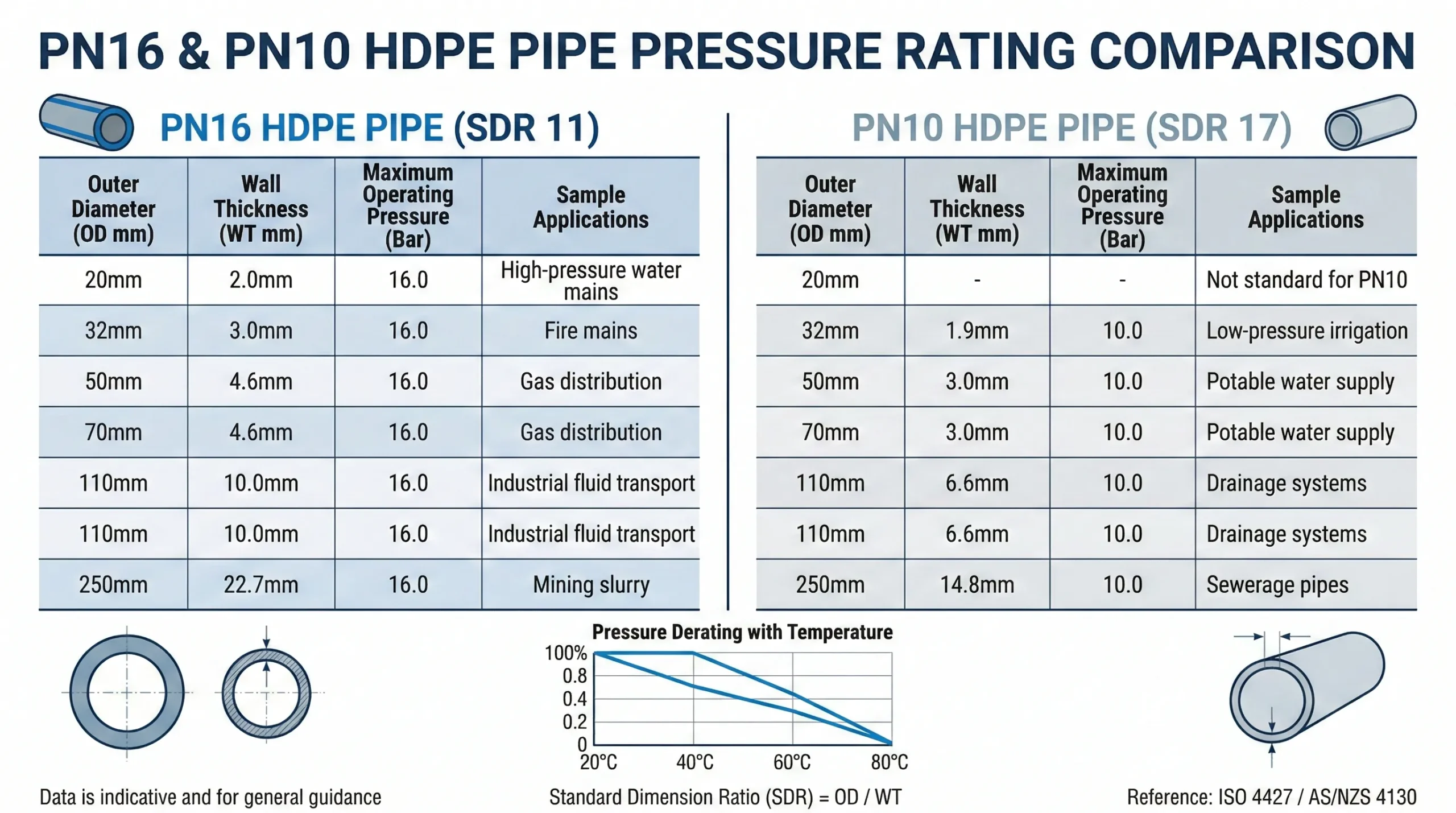
SDR 17 pipes are lighter, making transportation and installation easier, especially in long-distance pipeline projects.
When selecting between SDR 11 and SDR 17, engineers should evaluate:
- Required working pressure
- Project budget
- Pipeline diameter
- Environmental conditions
- Long-term operational safety
How to Choose Between SDR 11 and SDR 17
Choose
SDR 11 if:
- The system requires high pressure resistance (above 10 bar).
- Gas transmission or critical infrastructure is involved.
- Long-term reliability under demanding conditions is essential.
Choose
SDR 17 if:
- Operating pressure is moderate.
- Cost and ease of installation are priorities.
- Large diameter pipelines are required with manageable pressure levels.
For bulk quotations or customized requirements, visit our
HDPE natural gas & oil pipe product page, which also includes SDR selection guidance.
Conclusion
The main difference between SDR 11 and SDR 17 HDPE pipe lies in wall thickness and pressure capacity. SDR 11 offers higher strength and pressure resistance, while SDR 17 provides cost-effective performance for moderate-pressure applications. Choosing the right SDR ensures safety, durability, and cost efficiency for your pipeline system.
Understanding SDR ratings is essential for engineers, contractors, and procurement teams working with HDPE piping solutions. Always confirm material grade, pressure class, and compliance with international standards before finalizing your specification.

 English
 Español